


Kinkakuji (The Golden Pavilion), Kyoto

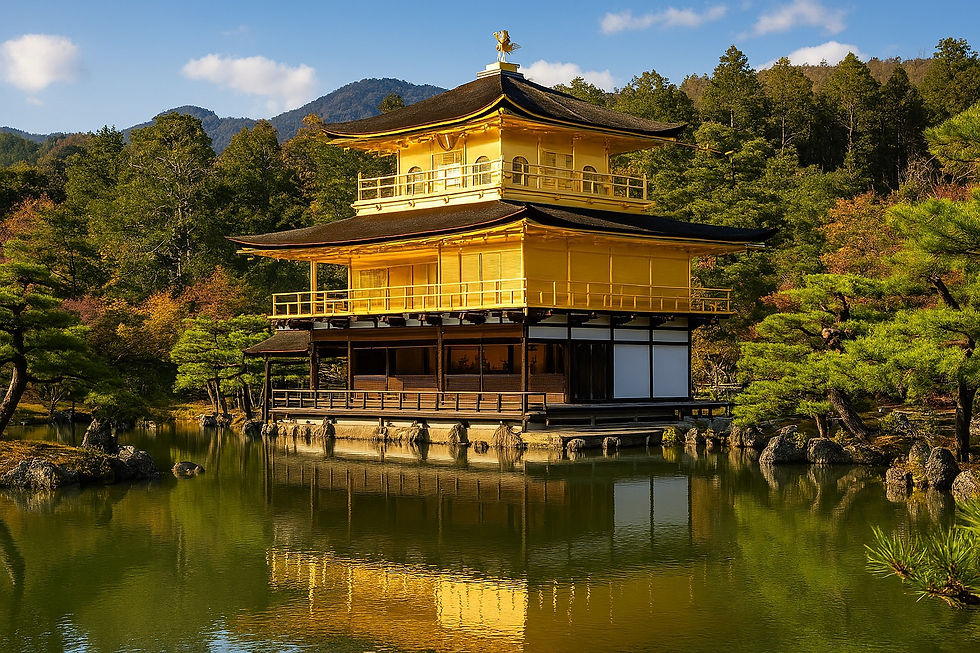
If there is one image that defines the historic splendor of Kyoto, it is the shimmering reflection of Kinkakuji (The Golden Pavilion) casting its glow upon the Mirror Pond.
Far more than just a photo opportunity, this Zen Buddhist temple is a masterpiece of architectural harmony and a survivor of a turbulent history. Whether you are planning your first trip to Japan or are a history enthusiast, this guide covers everything you need to know about the "Temple of the Golden Pavilion."
Where is Kinkakuji Located?
Kinkaku-ji is located in northern Kyoto, nestled at the foot of Mount Kinugasa.
Official Address: 1 Kinkakuji-cho, Kita-ku, Kyoto 603-8361, Japan.
Access: It is most easily reached by city bus (specifically bus numbers 101 or 205) from Kyoto Station, disembarking at the "Kinkakuji-michi" stop.
History and Origins: Who Built It?
While we know it today as a temple, Kinkakuji began its life as a lavish retirement villa.
The Vision of a Shogun
The site was originally a villa belonging to the powerful Saionji clan. However, in 1397, it was purchased by Ashikaga Yoshimitsu, the third Shogun of the Ashikaga shogunate. Yoshimitsu transformed the site into his private retirement estate, known as Kitayama-dono.
He designed the pavilion to be an earthly representation of the Pure Land (Buddhist Paradise). Upon his death in 1408, in accordance with his will, his son (Ashikaga Yoshimochi) converted the villa into a Rinzai Zen temple named Rokuon-ji (Deer Garden Temple). This remains its official religious name today, though the world knows it simply as Kinkakuji.
A Phoenix from the Ashes
The gleaming structure you see today is actually a reconstruction. The original pavilion survived centuries of wars (including the destructive Onin War), only to be tragically burned down on July 2, 1950, by a novice monk struggling with mental illness.
This shocking event was immortalized in Yukio Mishima's famous novel, The Temple of the Golden Pavilion. The current structure was rebuilt in 1955 aiming for strict historical accuracy, and the gold leaf was fully restored and thickened in 1987 to withstand Kyoto's weather.
Architectural Specialty: A Trio of Styles
The defining specialty of Kinkakuji is its unique architecture. It is one of the few buildings in the world that successfully fuses three distinct architectural styles into one harmonious structure.
1. The First Floor: The Chamber of Dharma Waters (Hosui-in)
Style: Shinden-zukuri (Palace Style).
Details: Built in the style of Heian period aristocracy, this floor uses natural wood and white plaster walls. It does not have gold leaf. It is designed to be an open, airy space that emphasizes the surrounding landscape.
2. The Second Floor: The Tower of Sound Waves (Choon-do)
Style: Buke-zukuri (Samurai Style).
Details: This floor represents the style of warrior aristocrats. It is completely covered in gold leaf on the exterior. Inside, it houses a seated Kannon Bodhisattva surrounded by the Four Heavenly Kings.
3. The Third Floor: Cupola of the Ultimate (Kukkyo-cho)
Style: Karayo (Chinese Zen Hall Style).
Details: The top floor is more bell-shaped and intricate, reflecting the Zen style brought from China. It is gilded inside and out. Perched on the shingled roof is a golden Phoenix (Ho-o), a symbol of rebirth and divine favor.
Cultural Significance
Kinkakuji is the ultimate symbol of Kitayama Culture. During Ashikaga Yoshimitsu's rule, he sought to unite the rival cultures of the time: the sophistication of the Imperial Court nobles, the strength of the Samurai warriors, and the spiritual depth of Zen Buddhism.
The temple is a physical manifestation of this union. Its significance is so profound that it was designated a UNESCO World Heritage Site in 1994 as part of the "Historic Monuments of Ancient Kyoto."
Why is it So Popular?
Kinkakuji consistently ranks as one of Japan's top tourist attractions for three main reasons:
Visual Impact: The sheer contrast of the brilliant gold leaf against the blue sky and green pines is unforgettable.
The Mirror Pond (Kyoko-chi): The pavilion overlooks a large pond designed to reflect the temple on the water's surface. On a calm day, the "double Kinkakuji" (one real, one reflected) is a photographer's dream.
Seasonal Beauty: The temple is stunning year-round—framed by cherry blossoms in spring, vibrant red maples in autumn, or capped with pristine white snow in winter.
What You Can Get & See There
A visit to Kinkakuji is a strolling experience. Here is the flow of what you will encounter:
The Main Pavilion: You cannot enter the pavilion itself, but the path allows you to view it from across the pond and then winds around the back for a closer look at the gold leaf details.
The Gardens: The grounds are a classic Muromachi-period strolling garden ("Kaiyu-shiki-teien") that utilizes Shakkei (borrowed scenery) from the surrounding mountains.
The Anmin-taku Pond: A smaller pond that never dries up, featuring a small stone pagoda (White Snake Mound) which visitors pray to for good luck.
Sekka-tei Teahouse: A historic teahouse built in the Edo period. Its name means "Place of Evening Beauty," noted for the way the setting sun hits the Golden Pavilion.
Fudo-do Hall: Near the exit, this hall houses a statue of Fudo Myoo (The Wisdom King). It is a popular spot to light a candle or incense for protection and success.
Souvenirs and Charms: You can purchase unique gold-flaked matcha sweets, exclusive Omamori (good luck charms) for prosperity, and Goshuin (temple stamps) for your collection.
Experience Japan
#Kinkakuji #GoldenPavilion #Kyoto #Japan #VisitJapan #JapanTravel #TravelGram #Wanderlust #BeautifulDestinations #KyotoJapan #KinkakujiTemple #ZenBuddhism #JapaneseArchitecture #UNESCOWorldHeritage #KyotoTrip #HistoricJapan #Japan_Vacations #TempleHopping #InstaKyoto #KyotoGram #Reflections #TravelPhotography #Japantourism #AsianHistory #BucketListTravel


